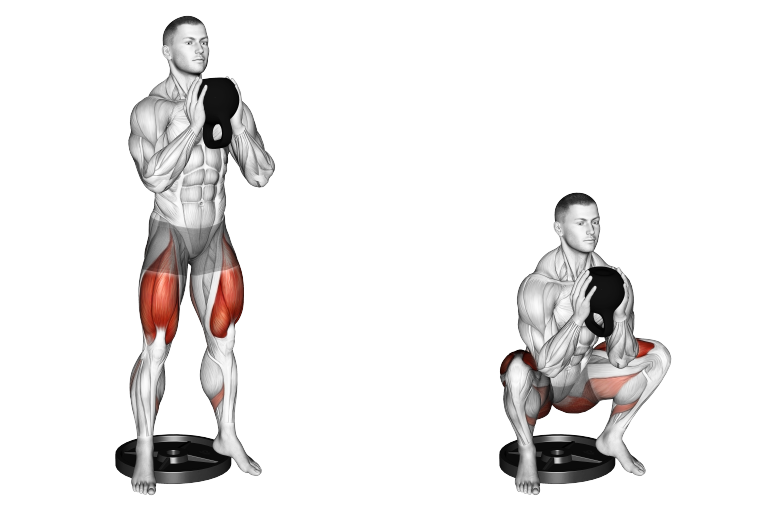
This exercise involves holding a kettlebell close to your chest while performing a squat. It targets the lower body muscles, including the quads, glutes, and hamstrings, while also engaging the core and upper body. It can be modified for different fitness levels by adjusting the weight of the kettlebell.
Type
Strength
Equipment
Kettlebell
Difficulty
Intermediate
Key Benefits
Extreme Quadriceps Emphasis: The elevated heel position shifts the load forward, significantly increasing tension on the quads (especially the VMO) compared to a standard squat.
Greater Range of Motion: Raising the heels allows for a deeper squat, even for those with limited ankle mobility, leading to better muscle development.
Upright Postural Alignment: The combination of the heel wedge and the front-loaded weight makes it easier to keep the torso vertical, reducing lower back strain.
Enhanced Core Stability: Holding the weight in the "goblet" position engages the core and upper back to maintain balance and prevent the chest from collapsing.
Improved Knee Health and Stability: By strengthening the muscles around the knee joint through a full range of motion, it can help improve overall joint integrity.
High Metabolic Demand: Engaging large muscle groups in a deep, challenging range of motion makes it a time-efficient exercise for both strength and cardiovascular conditioning.
Minimal Equipment Needed: Requires only a dumbbell (or kettlebell) and a small wedge or weight plate to elevate the heels, making it ideal for any setting.
How to perform
- Starting Position: Stand with your heels elevated on a wedge or weight plate, keeping your feet close together (about 6 inches apart). Hold a kettlebell or dumbbell with both hands at chest level.
- The Descent: Squat down by bending your knees. Focus on keeping your torso as upright as possible, allowing your knees to track forward over your toes. Depth: Lower your body as far as comfortable—the heel elevation allows for a deeper range of motion, often well below parallel.
- The Ascent: Pause for a moment at the bottom, then drive through your feet to return to the standing position, maintaining a proud chest throughout.
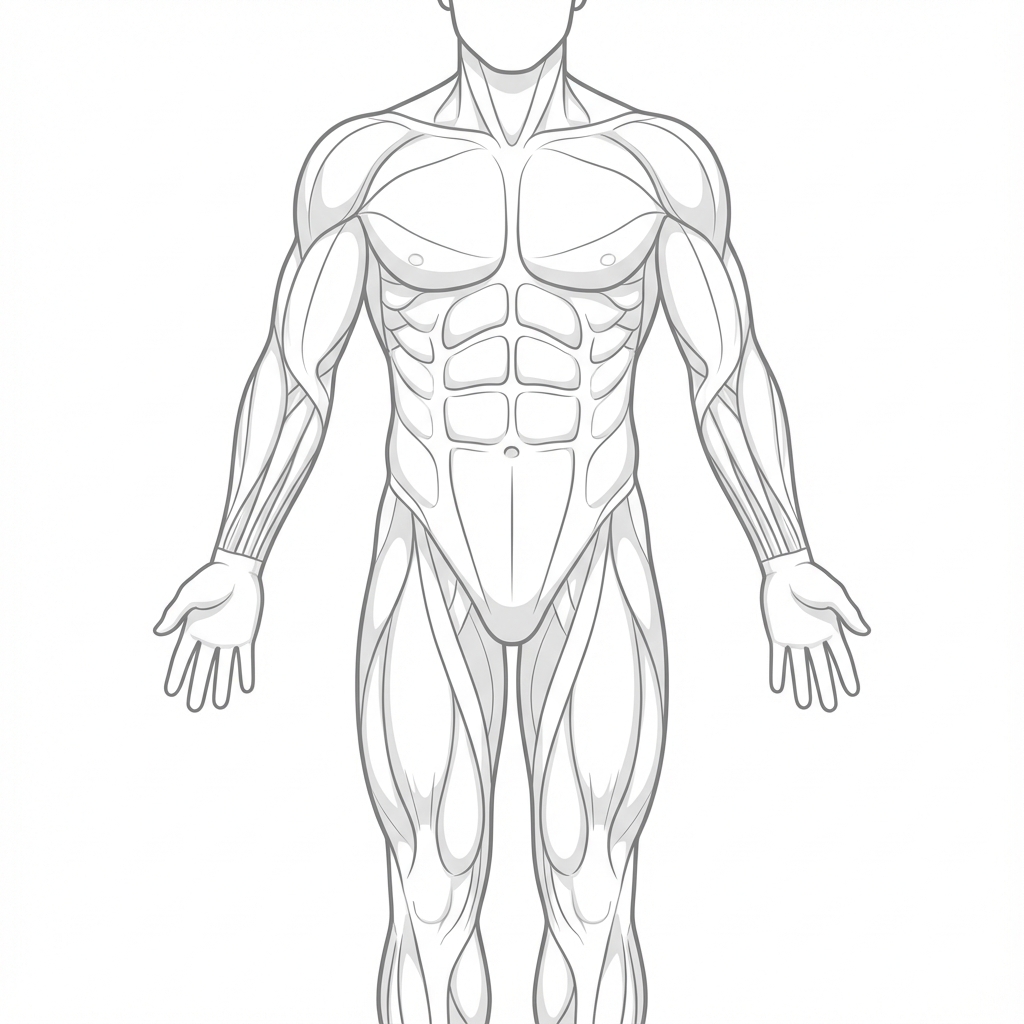
FRONT VIEW
BACK VIEW
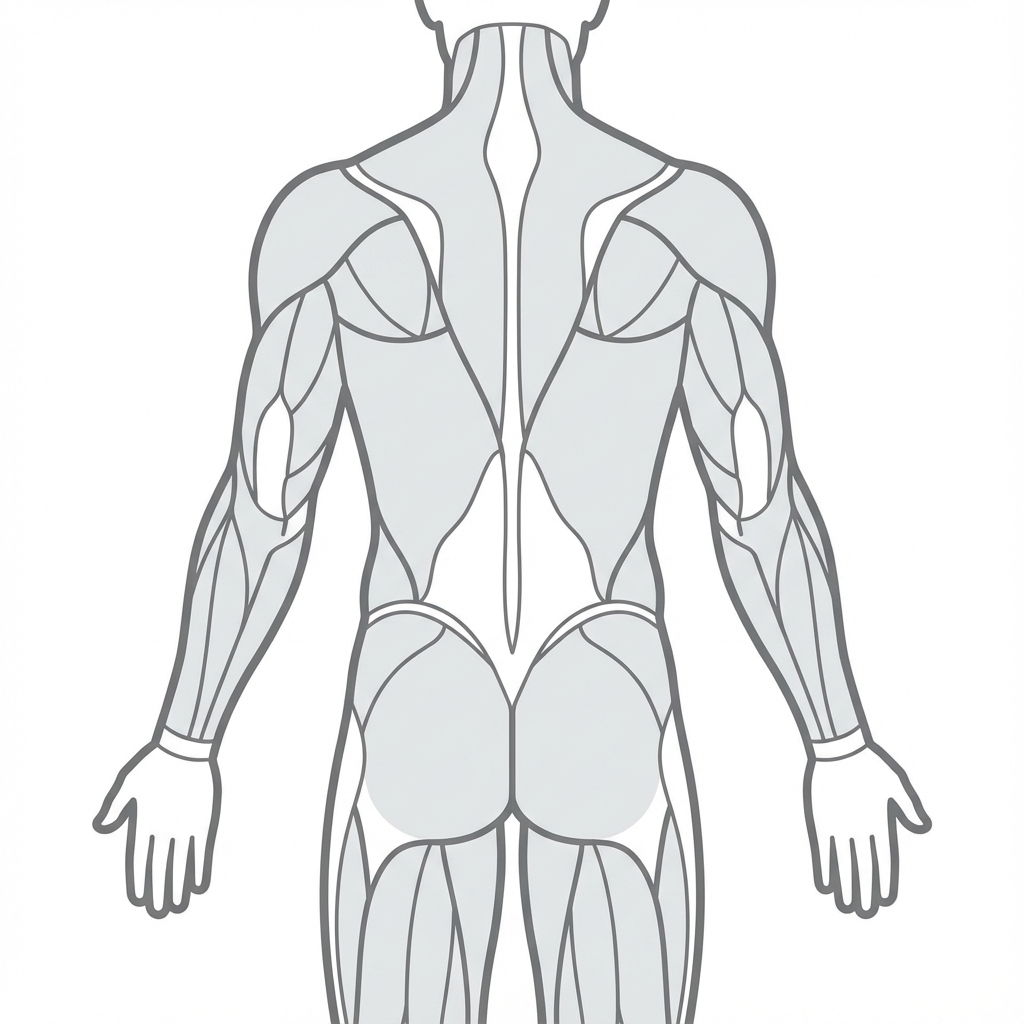
Glutes
Primary
Hamstrings
Primary
Abs
Secondary
Upper Back
Primary
Shoulder
Primary