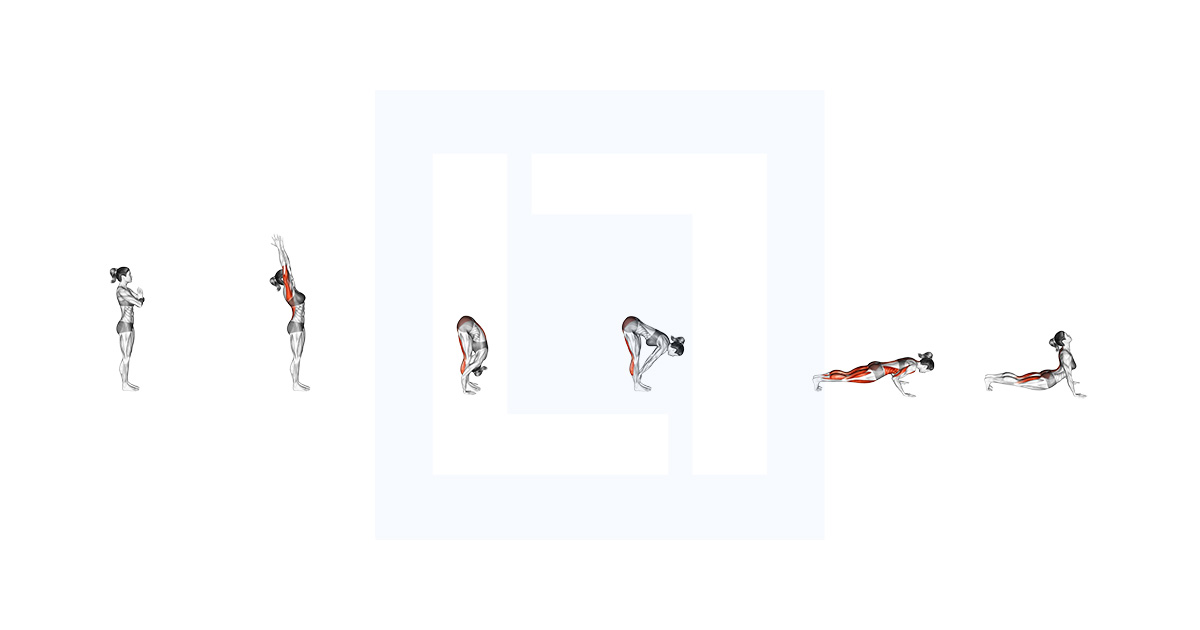
Vinyasa refers to a style of yoga where poses are linked together with breath in a flowing, dynamic sequence. In practice, "taking a vinyasa" typically means performing the transition sequence: plank → chaturanga (low push-up) → upward-facing dog → downward-facing dog. This transition appears repeatedly throughout a vinyasa class and builds upper-body strength, spinal mobility, and core endurance.
Muscle Group
Back, Chest, Core, Yoga
Equipment Required
Bodyweight
Type
Flexibility
Equipment
Band
Difficulty
Intermediate
Key Benefits
- Builds upper-body and core strength through chaturanga
- Improves spinal mobility through upward and downward dog
- Links breath to movement for mindful practice
- Provides cardiovascular conditioning at faster tempos
- Builds endurance for longer yoga practices
- Foundational transition in most dynamic yoga styles
How to perform
- Begin in Plank Pose with arms straight, body in a straight line from heels to head.
- Exhale and lower to Chaturanga Dandasana — bend your elbows to lower halfway down, keeping elbows tucked close. Hold for a breath.
- Inhale and roll forward over your toes into Upward-Facing Dog — press up with arms straight, lift your chest, hips off the floor, tops of feet pressing into the mat.
- Exhale and lift your hips up and back into Downward-Facing Dog — an inverted V shape with heels pressing toward the floor.
- Hold Downward Dog for one to five breaths before transitioning to the next pose or sequence.
- This four-pose transition is “one vinyasa” and is repeated many times throughout a class.
- Modify by dropping knees in plank/chaturanga, or replacing upward dog with cobra (lower version).
- Move with your breath — each transition should align with an inhale or exhale.
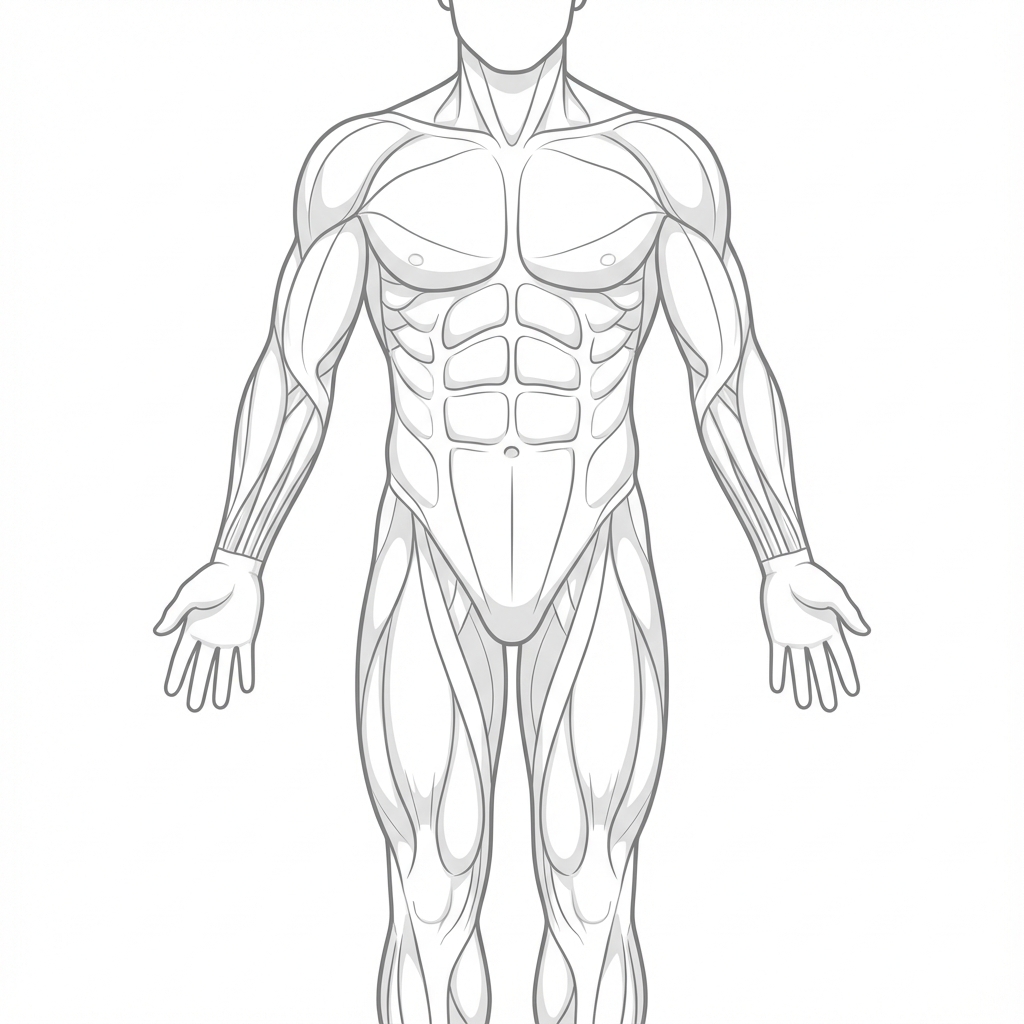
FRONT VIEW
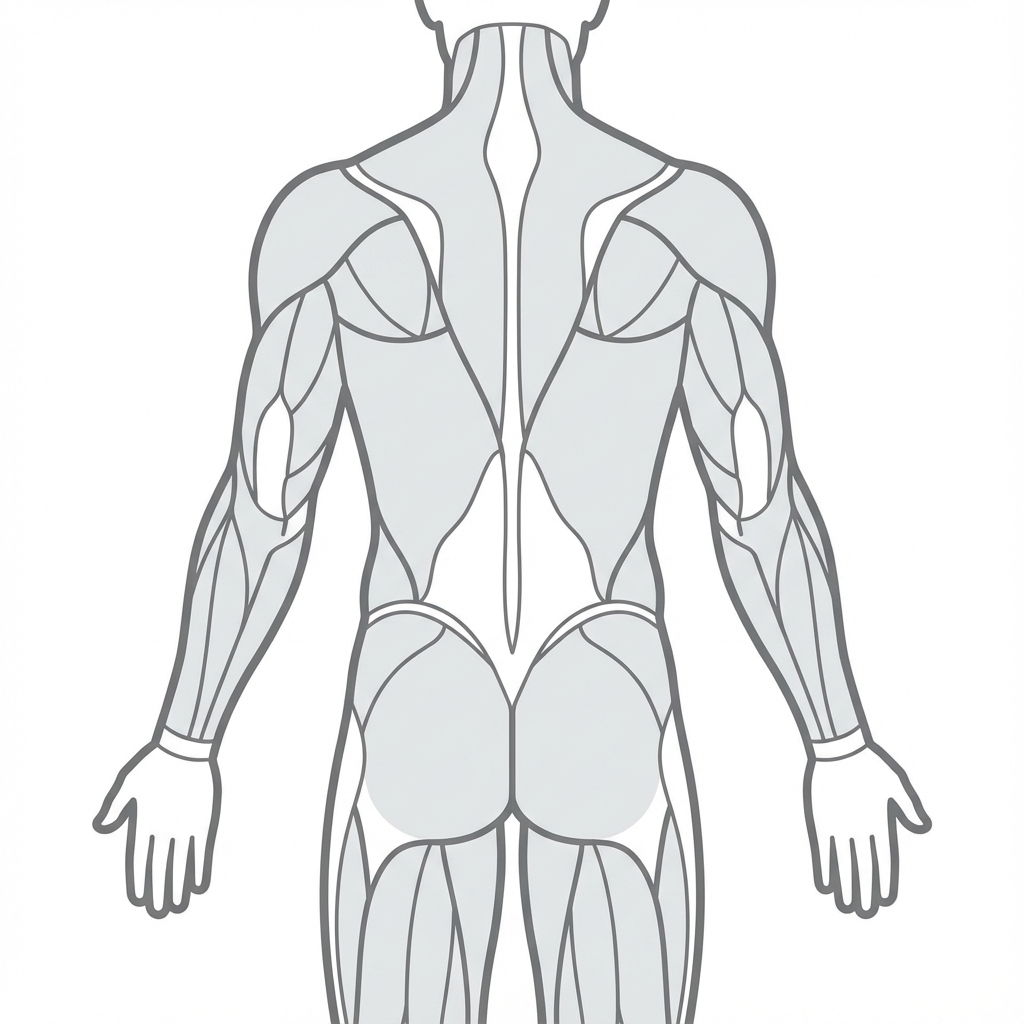
BACK VIEW
Abs
Primary
Lower Back
Primary
Hamstrings
Primary
Chest
Primary
Shoulder
Primary