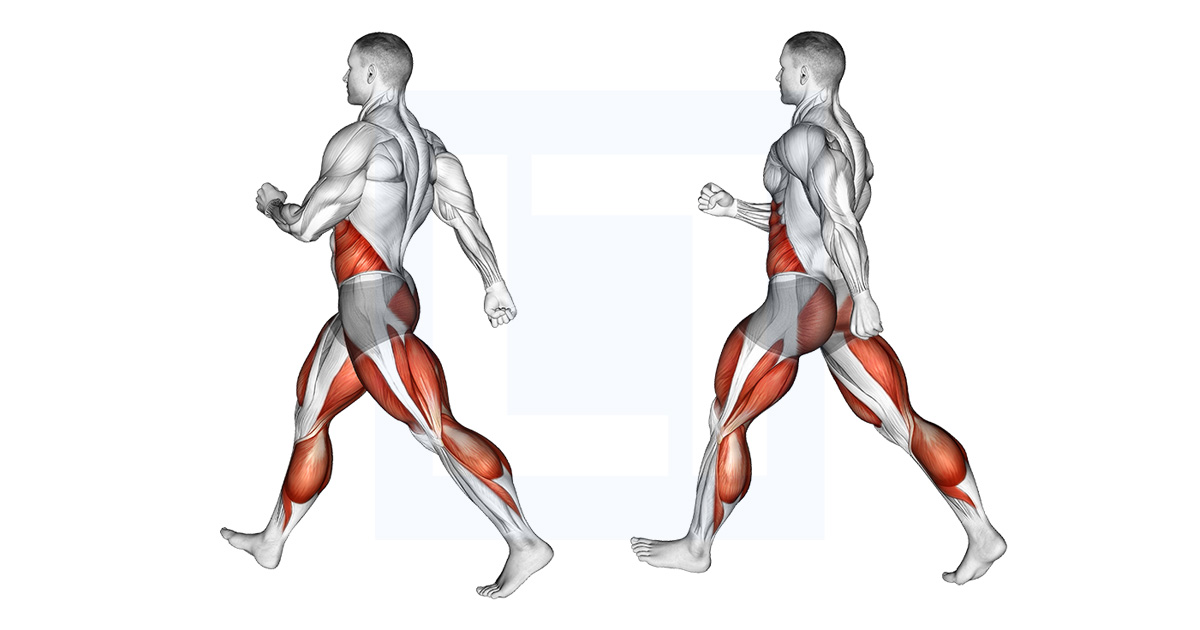
Brisk walking is the most accessible form of cardiovascular exercise — walking at a faster pace than normal (typically 3.5 to 4.5 mph). It is low-impact, sustainable, and suitable for all fitness levels. Brisk walking provides significant cardiovascular benefits, supports weight management, and is one of the most recommended exercises by health professionals.
Muscle Group
Calves, Cardio, Hamstrings, Quadriceps
Equipment Required
Bodyweight
Type
Cardio
Equipment
Band
Difficulty
Intermediate
Key Benefits
- Low-impact and joint-friendly
- Accessible to all fitness levels
- Sustainable for daily exercise
- Supports cardiovascular health
- Aids weight management
- No equipment needed beyond proper shoes
How to perform
- Stand tall with shoulders back and head up. Look ahead, not down.
- Begin walking at a moderate pace. Gradually increase to a brisk pace where you are slightly breathless but can still hold a conversation.
- Take natural strides — not too long, not too short. Land on your heel and roll through to the toe.
- Bend your elbows at 90 degrees and pump your arms naturally.
- Maintain the brisk pace for the desired duration (20 to 60 minutes).
- Walk on flat ground initially. Add inclines or stairs as fitness improves.
- Cool down with 5 minutes of slower walking at the end.
- Aim for at least 30 minutes of brisk walking most days of the week.
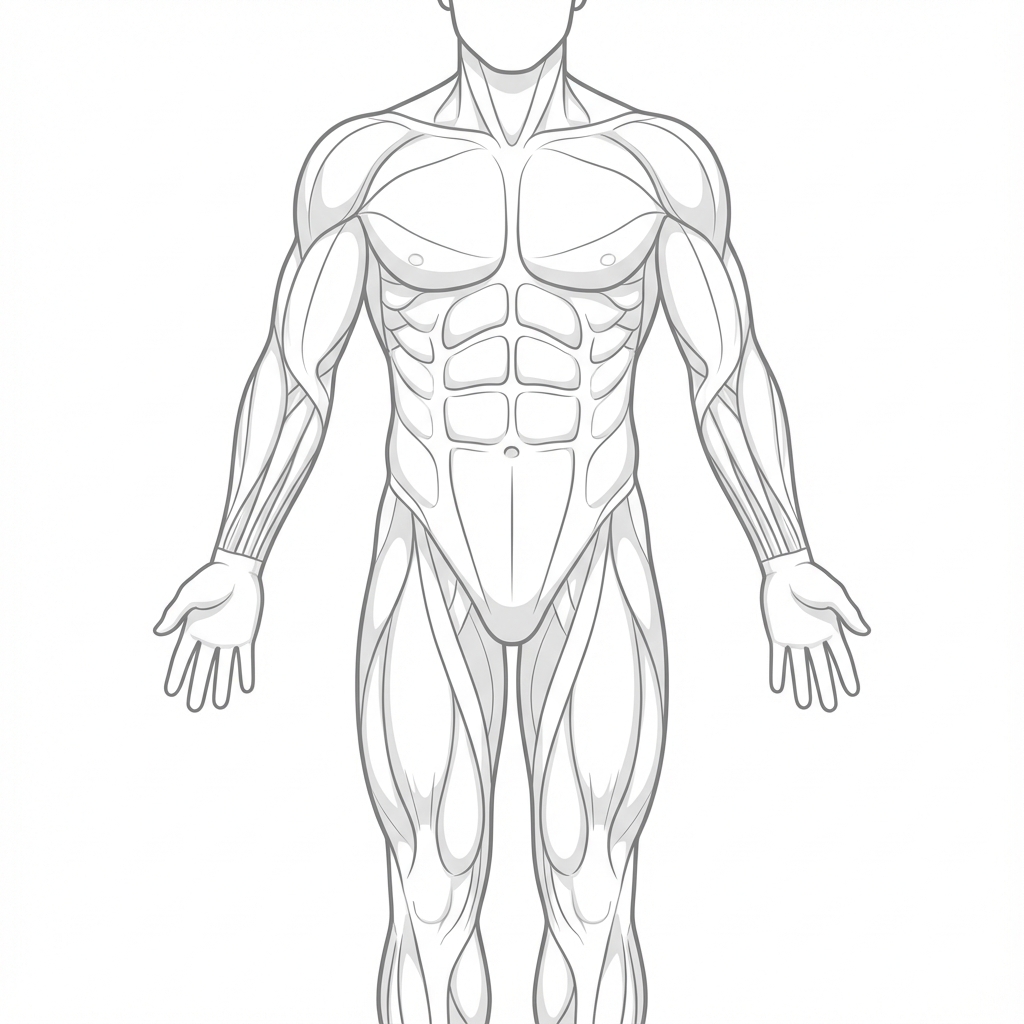
FRONT VIEW
BACK VIEW
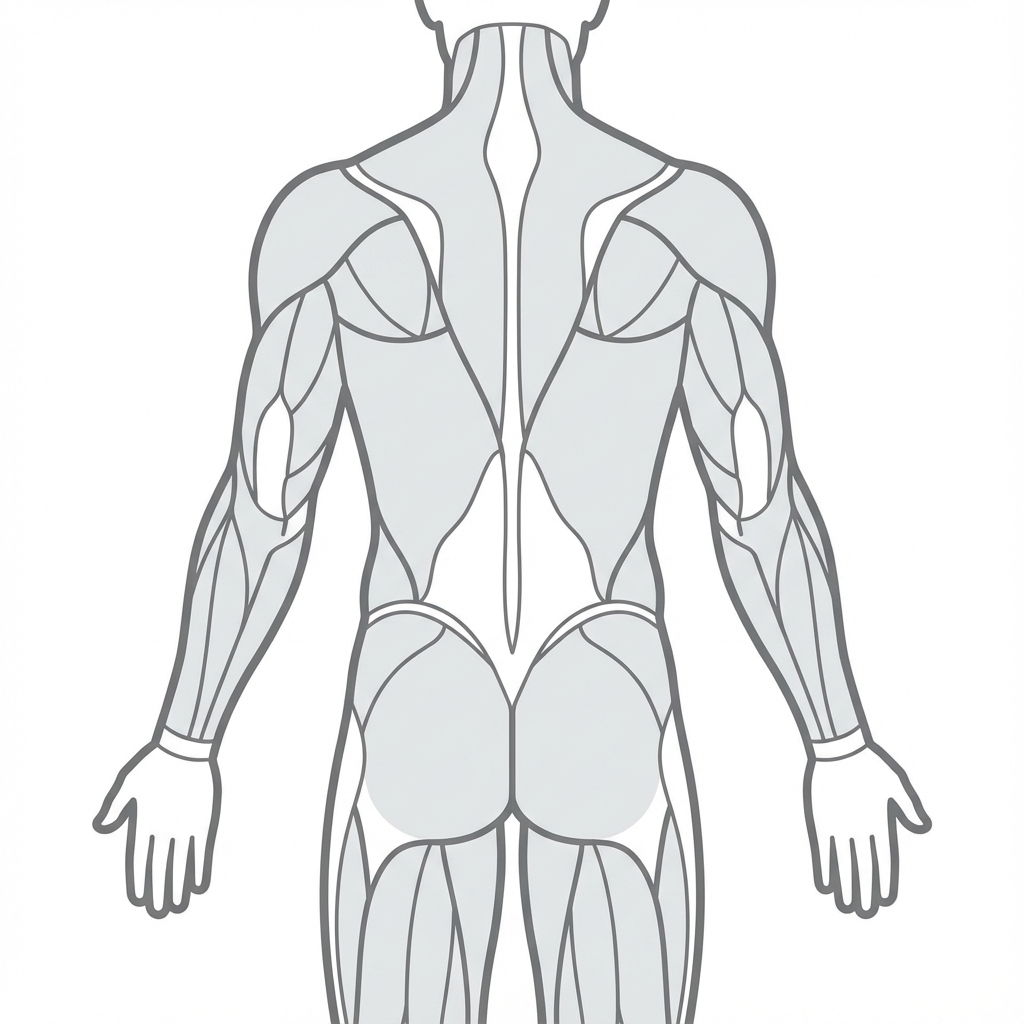
Abs
Primary
Glutes
Primary
Calves
Primary
Hamstrings
Primary
Quadriceps
Primary
Hip Flexors
Primary